 Color Ring
Gel Pens for Coloring: How to Choose Them and Use Them Well
Which gel pens work for coloring books: ink types, tip sizes, how to avoid smudges and skipping, using them with colored pencils, and pages that suit them.
Gel pens give a coloring page something pencils can’t: shiny metallics, glitter, neon and opaque white dots that sit on top of other colors. They also smudge, skip and run out faster than you expect if you pick the wrong set. This guide explains how to choose gel pens for coloring, which ink types do what, and how to use them with pencils and markers without ruining a page you spent hours on.
The quick answer
- Pick the ink type for the job: classic for small areas, milky or pastel for opaque color, metallic and glitter for accents, white for highlights.
- Choose a fine or medium tip (0.5–0.8 mm ball) for detailed adult pages; bold (1.0 mm) fills faster on bigger shapes.
- Test every pen on a scrap or the inside cover before you start — gel pens often skip for the first few strokes.
- Color in small strokes and work away from your hand so you don’t drag wet ink.
- Let glitter, metallic and milky ink dry for a minute or two before you touch the page or close the book.
What gel pens are good at (and what they are not)
Gel ink is pigment held in a thick, water-based gel. It lays down a smooth, saturated line with almost no pressure, which makes it relaxing to use on tiny shapes.
- Great for: small, enclosed areas — mandala petals, jewelry, patterns on clothes, scales, eyes, stars, lettering — and for adding sparkle or highlights on top of a finished page.
- Not great for: filling a large background. Gel pens leave visible stroke lines, run out quickly on big areas and can make thin paper wavy. For a sky or a wall, use colored pencils or markers and keep the gel pens for details.
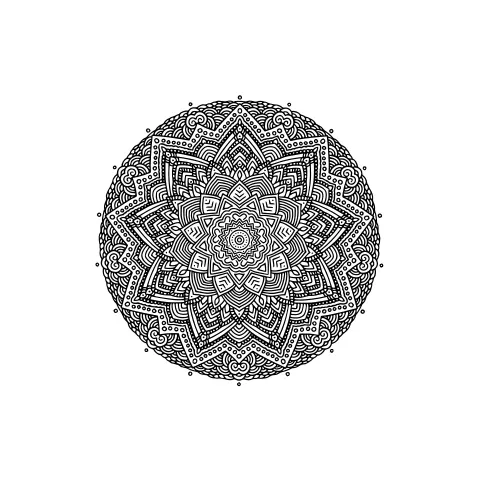
That is why detailed pages suit them best. Our mandala coloring pages are made of hundreds of small cells, so you can fill each one with a single color and never need a big flat area.
Gel pen ink types
| Type | What it looks like | Best use |
|---|---|---|
| Classic | Bright and slightly translucent, like a fine marker | Small areas, outlines, writing |
| Milky / pastel | Opaque and chalky; covers dark colors | Light details on dark areas, black paper |
| Metallic | Opaque with a metal shine | Jewelry, crowns, frames, mandala centers |
| Glitter | Translucent color with sparkles | Accents: wings, tails, stars, snow |
| Neon / fluorescent | Very bright; some glow under black light | Pop-art pages, small eye-catching areas |
| White (opaque) | Covers almost any color | Highlights in eyes, on lips, water drops |
Tip sizes. Gel pens are sold by ball size, usually 0.5 mm (fine), 0.7–0.8 mm (medium) and 1.0 mm (bold). The actual line is thinner than the ball size. Fine tips are easier on detailed adult pages; bold tips are better for glitter and metallic ink, which flows more smoothly through a bigger ball.
How to choose a gel pen set
Big sets with 100+ pens are popular gifts, but the number on the box is not the whole story. Before you buy, check:
- Unique colors vs refills. Many large sets count refills or near-duplicate shades. Look for the number of unique colors.
- The mix of ink types. A good coloring set has classic, milky, metallic and glitter pens, not only classic colors.
- Acid-free, archival, pigment ink if you want a finished page to keep its colors for years.
- Refills. Gel pens run out much faster than pencils; refillable pens save money if you color often.
- Grip and cap. Long sessions are easier with a soft grip. Caps that click shut keep the tips from drying out.
Well-known artist lines such as Sakura Gelly Roll (classic, metallic, glitter and white pens) or a broad white Uni-ball Signo for highlights cost more per pen than a 120-pen value pack, but many colorists keep a few of them for the jobs where opacity matters — white highlights and color on black paper. A value pack is fine for learning and for kids.
How to color with gel pens, step by step
- Plan your colors. Gel ink is hard to fix, so decide on a palette first. Testing colors on a swatch sheet helps: real gel colors often look different from the cap.
- Start the flow on a scrap. Scribble a small loop until the ink runs evenly. Keep that scrap next to you for every new pen.
- Outline, then fill. Trace the inside edge of a shape, then fill it with short strokes in one direction. Small circular strokes hide lines better on bigger shapes.
- Work from top to bottom (or left to right if you are right-handed, the other way if you are left-handed), so your hand never rests on wet ink.
- Layer only when dry. You can add a second gel color on top for a darker edge or shading, but wait until the first layer is dry.
- Finish with accents: glitter on top of classic colors, metallic outlines, and white dots for shine.
Using gel pens with colored pencils and markers
- Pencils first, gel last. Gel pens work well on top of light pencil layers. On heavily burnished pencil — thick, shiny wax — the pen skips because the ball can’t grip the surface. Leave small areas without heavy pencil where you plan to add gel details, or use only a very light pencil layer there.
- White gel highlights go on at the very end: a dot in each eye, a stripe of shine on lips or hair, light on water. If you like smooth pencil work, our guide on how to blend colored pencils pairs well with this step.
- Markers first, then gel. Gel ink sits nicely on dry alcohol or water-based marker. Don’t run a marker over gel ink: it can smear the gel or clog the marker tip.
Digital coloring uses the same idea: the lightest highlights go on last, in just a few small spots. This short video shows glossy lips colored in the Color Ring app — watch how little white it takes:
Paper: smudging, ghosting and bleed-through
Gel pens don’t bleed through paper the way alcohol markers do, but heavy, wet ink can show on the back of thin pages (“ghosting”) and make them wavy.
- Thin coloring-book paper: fine for small areas; avoid going over the same spot many times. Put a scrap sheet under the page.
- Printed pages: a smooth 24–32 lb (90–120 gsm) paper or light cardstock holds gel ink best. Our guide on how to print coloring pages has a paper table.
- Black paper: use milky, metallic, glitter or white gel pens — classic gel ink almost disappears on dark paper.
- Inkjet prints: let the printed lines dry well before coloring, or the gel pen can pick up the black line and drag it into your color.
Pages that suit gel pens
Gel pens love small spaces and patterns. Try them on:
- Mandala coloring pages — fill each petal with one color, then add metallic or glitter in the center.
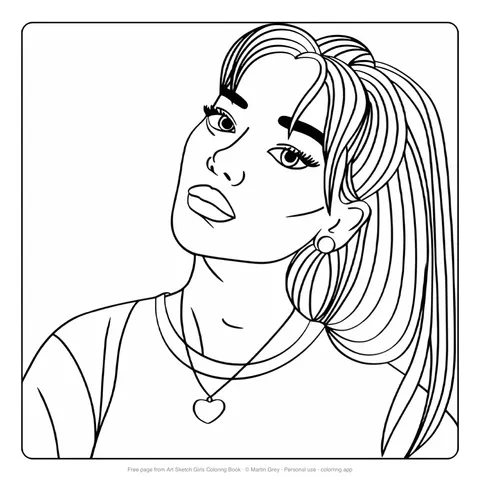
- Aesthetic girls coloring pages — jewelry, hair clips, patterned sweaters and white highlights in the eyes.
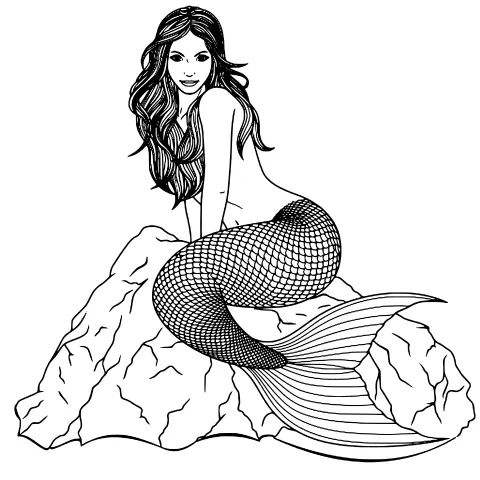
- Mermaid coloring pages — glitter scales, metallic shells and pearls, milky bubbles on darker water.
Want a page made for your own idea — a name in a mandala, your pet in a garden? Create your own coloring page and print it on heavier paper for gel pens.
Common gel pen problems and fixes
- The pen skips. Scribble on a scrap, keep a light, even pressure, and avoid waxy pencil areas. Store pens horizontally with caps closed.
- The pen doesn’t write at all. It may have dried at the tip. Scribble firmly on scrap paper, or replace the refill; don’t shake it hard or soak it.
- Smudges. You touched wet ink. Wait longer for glitter and metallic ink, color away from your hand, or rest your hand on a clean sheet of paper.
- Visible stroke lines. Use smaller strokes in one direction, or switch to pencils for big areas.
- Colors look darker than the cap. Make a swatch sheet and choose from it, not from the barrel.
- The page curls. Too much ink in one area on thin paper — color big areas with pencils instead.
FAQ
Are gel pens good for coloring? Yes, for small, detailed areas and special effects like metallic, glitter, neon and white highlights. For large areas, colored pencils or markers are easier and look smoother.
Do gel pens smudge? They can while the ink is wet. Classic gel ink dries in seconds on most paper; glitter, metallic and milky inks take longer. Color away from your hand and let each area dry.
Do gel pens bleed through coloring books? Usually not, but heavy ink can show through thin pages. Put a scrap sheet underneath and avoid going over the same spot many times.
Can you use gel pens over colored pencil? Yes, over light pencil layers. Heavy, waxy pencil makes gel pens skip, so add gel details where the pencil is light, or use gel only for the final highlights.
Are gel pens permanent? Not all of them. Many are water-resistant once dry and some are labeled archival or pigment-based, but check the package if you plan to add water or keep the page for years.
Color the same pictures in the app
Many of the drawings above are also in the Color Ring app for iPhone and iPad, where you can try a palette, add glow effects and undo any stroke — a handy way to plan colors before you pick up your gel pens and color the printed page.