 Color Ring
Best Markers for Coloring Books: How to Choose Them and Stop Bleed-Through
How to pick the best markers for coloring books: water-based vs alcohol, tip shapes, a quick bleed test, paper for printed pages and pages that suit markers.
Markers give the brightest, flattest color of any coloring tool, and they are fast: one stroke fills a petal that would take a minute with a pencil. They are also the tool most likely to ruin the next page of your book. This guide explains how to pick the best markers for coloring books by type and tip, how to test for bleed-through before it happens, and which pages make markers shine.

The quick answer
- For most coloring books, choose water-based dual-tip markers (a brush or bullet tip on one end, a fine tip on the other). They rarely bleed through and handle both big and small areas.
- Use alcohol markers only on single-sided pages or thick paper, with a blotter sheet underneath — they blend beautifully but soak through almost any book paper.
- Add a fineliner set (0.4 mm) for tiny mandala cells and details.
- Test every new set on the inside cover or the last page before you start a picture.
- Always slide a sheet of scrap paper under the page you are coloring.
Why markers are tricky in coloring books
Most coloring books are printed on fairly thin, uncoated paper, and many are printed on both sides of each sheet. Marker ink is liquid, so it has two ways to cause trouble:
- Bleed-through: the ink soaks right through the paper and stains the back — or the next drawing.
- Ghosting: the ink doesn’t go through, but you can see a shadow of your coloring from the other side.
A book printed single-sided (one drawing per sheet, blank back) solves most of this: even if a marker ghosts, it only marks a blank page. Our own coloring books are printed that way for exactly this reason. With a double-sided book, the type of marker matters much more.
Marker types compared
| Type | Bleed risk on book paper | Feel and look | Best for |
|---|---|---|---|
| Water-based dual tip (brush + fine) | Low | Bright, slightly streaky on big areas | All-round coloring, adults and teens |
| Water-based fineliners (0.3–0.4 mm) | Very low | Precise lines, small fills | Mandalas, patterns, tiny details |
| Washable kids’ markers | Low | Bold, less saturated | Kids, simple pages, classrooms |
| Alcohol markers | High | Smooth, streak-free, blends well | Single-sided pages, thick printed paper |
| Acrylic paint markers | Low (but sits on top) | Opaque, matte, covers mistakes | Accents, dark areas, covering lines |
| Brush pens (water-based) | Low | Thick-to-thin strokes, watercolor-like | Hair, petals, soft gradients |
Brand names are only examples of each type. Water-based dual-tip sets come from many makers (Ohuhu, Tombow and Staedtler among them); popular alcohol lines include Copic and Ohuhu’s alcohol range; fineliners like Stabilo Point 88 or Staedtler Triplus are classics for detail work. What matters more than the brand is the ink type printed on the box.
Water-based vs alcohol markers
This is the question most people ask, and the answer depends on your paper.
Water-based markers use water as the carrier for the dye or pigment. The ink stays closer to the surface, so it rarely bleeds through a book page. The downside: if you go over the same spot many times, the paper can pill or tear, and large areas show streaks. You can soften those streaks by coloring in small circles or in one direction only.
Alcohol markers use alcohol as the carrier. The ink spreads into the paper fibers and dries fast, which is why the color looks smooth and two shades blend into each other. The same property means it goes straight through thin paper — expect the back of the page to be colored too. They also cost more per marker and have a strong smell, so ventilate the room.
A simple rule: double-sided book → water-based; single-sided book or heavy printed paper → either.
Tip shapes and what they do
- Brush tip: flexible, like a paintbrush. Press lightly for a thin line, harder for a wide stroke. Great for hair, petals and backgrounds.
- Bullet tip: a round, firm point that gives an even line. Easy for beginners and kids.
- Chisel tip: wide and flat; fills large areas fast on alcohol markers.
- Fine tip / fineliner: 0.3–0.5 mm, for small spaces, outlines and patterns.
For detailed adult pages, a set with a brush tip on one end and a fine tip on the other covers almost everything. Tiny mandala cells are easiest with a separate fineliner.
The 30-second bleed test
Before you use a new set in a book you care about:
- Open to the inside cover, the last page or any page you don’t plan to color.
- Color a small square with the darkest marker in the set, going over it twice.
- Wait one minute and turn the page.
- No mark on the back: you’re safe. A shadow: fine for single-sided books, careful in double-sided ones. Ink on the back: use this marker only on single-sided or printed pages.
Dark colors (black, navy, purple) bleed first, so test those, not the yellow.
How to protect the next page
- Slide a sheet of printer paper or thin cardstock under the page you are coloring. Specialty blotter paper works too.
- For alcohol markers, use two sheets — a single sheet of printer paper is often not enough.
- Keep the book flat and don’t close it until the ink is dry.
- Many colorists cut a page out of the book and color it on a clipboard, then keep finished pages in a folder.
Paper for printed coloring pages
Printing your own pages gives you control over the paper, which solves most marker problems.
- Water-based markers: a smooth 24–32 lb (90–120 gsm) paper works well.
- Alcohol markers: 65–110 lb cardstock or dedicated marker paper; standard 20 lb copy paper will bleed and feather.
- Inkjet prints: let the printed lines dry well before coloring, or an alcohol marker can lift and smear the black outline.
Our guide on how to print coloring pages has a full paper table and printer settings.
Technique: smooth color with markers
- Work light to dark. Lay the lightest shade first, then add the darker one only where the shadow goes — under hair, along folds, at the edges of petals.
- Keep a wet edge on bigger areas: color in small overlapping circles and don’t let one section dry before you continue it.
- Don’t over-color water-based ink. Two or three layers are fine; ten layers will pill the paper.
- Add texture with dots and lines instead of more layers — a few dots on a scarf, lines on a skirt.
- Finish with highlights: a white gel pen on eyes, lips and shiny surfaces. Our gel pens for coloring guide covers this step.
The same light-to-dark layering is how hair gets its shine, on paper or on a screen. This short video from our app shows it on blonde hair — base color, a darker shade in the strands, then a light band of highlight:
If you prefer soft, blended skin and gradients, colored pencils are easier than markers; see how to blend colored pencils. Many people combine both: markers for the flat base color, pencils on top for shading.
Pages that suit markers
Markers love clear outlines and medium-sized shapes. Try them on:
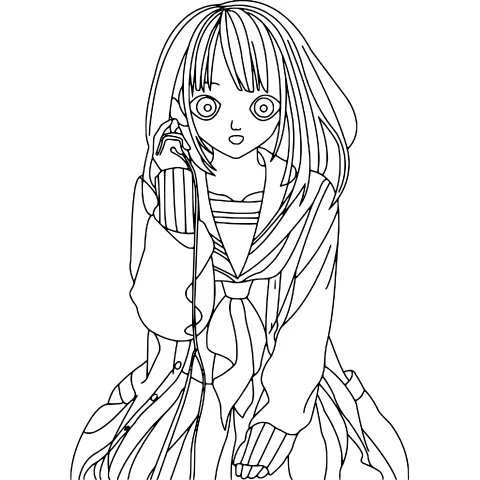
- Anime coloring pages — anime art is drawn for flat, bright color: one base shade for hair and clothes, one darker shade for shadows, white left for highlights.
- Butterfly coloring pages — the easy butterflies have bold wing cells that a brush tip fills in one stroke.
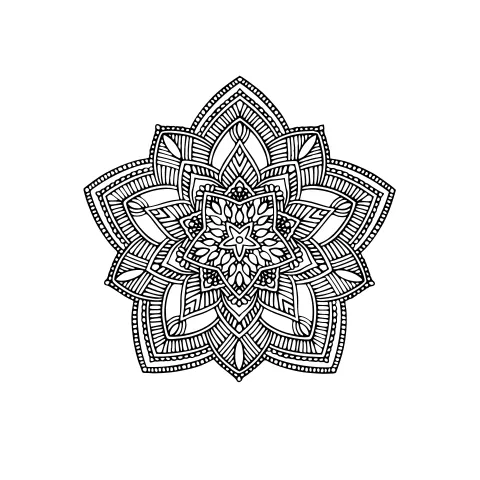
- Mandala coloring pages — perfect for fineliners: one color per ring, repeated around the circle.
Want more anime pages in one place? The Anime Coloring Book has 40 hand-drawn anime girls printed on single-sided pages, so markers never ruin the next picture.
Common marker mistakes
- Skipping the test. One dark marker can ruin the drawing on the back.
- Coloring a double-sided book with alcohol markers without thick protection under the page.
- Pressing hard on a brush tip. It frays; let the tip bend lightly.
- Leaving caps off. Markers dry out fast; click each cap shut before you take the next color.
- Going over wet ink again and again — it pills the paper and makes the color darker than you wanted.
- Storing dual-tip markers upright. Store them flat so both tips stay wet.
FAQ
Are alcohol or water-based markers better for coloring? Water-based markers are better for most coloring books because they rarely bleed through thin paper. Alcohol markers blend more smoothly but soak through, so use them on single-sided pages or thick paper.
What paper do coloring books use? Many mass-market coloring books use uncoated paper of roughly 50–70 lb text weight (about 75–105 gsm), often printed on both sides. Thicker paper and single-sided printing are the two things that make a book marker-friendly.
Can I use acrylic markers in my coloring book? Yes. Acrylic paint markers sit on top of the paper and rarely bleed, and they are opaque, so they cover mistakes and work on dark areas. They don’t blend like dye-based markers, so use them for accents and small areas.
What are the downsides of alcohol markers? They bleed through most book paper, cost more per marker, have a strong smell and can’t easily be layered with water-based ink on top. On thick, smooth paper they are excellent.
Why do my markers leave streaks? Water-based ink dries quickly at the edges of each stroke. Color in small circles or in one direction, keep the area wet while you work, or switch to a brush tip.
Plan your colors first
Choosing colors is the hardest part with markers, because you can’t erase them. Many of the pictures above are also in the Color Ring app for iPhone and iPad, where you can try a palette, undo any stroke and then pick up your markers knowing exactly which shades go where.